1.The Royal Thames Yacht Club (RTYC)

- The Royal Thames Yacht Club (RTYC) is the oldest continuously operating yacht club in the United Kingdom. Its headquarters are located at 60 Knightsbridge, London, England, overlooking Hyde Park.
- The Club is involved in a range of yachting events for both the cruising and racing yachtsman, motor yacht owners and all those interested in the sea. Through the Club's events and other contacts, members have access to yachting activities worldwide. They also have use of all the facilities of the Clubhouse in Knightsbridge and leading reciprocal clubs around the world.
2.Yacht Club De Monaco
- The Fédération Monégasque de Voile is the national governing body for the sport of sailing in Monaco, recognised by the International Sailing Federation. This organisation is in effect part of the Yacht Club de Monaco which is the only Sailing Club in the Country.
3.New York Yacht Club
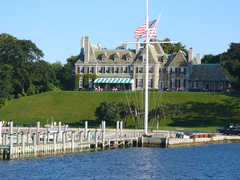
- The New York Yacht Club is a private social club and yacht club based in New York City and Newport, Rhode Island. It was founded in 1844 by nine prominent sportsmen. The members have contributed to the sport of yachting and yacht design. The organization has over 3,000 members as of 2011. Membership in the club is by invitation only. Its officers include a Commodore, vice-commodore, rear-commodore, secretary and treasurer.
4.Dubai Marina Yacht Club
- Dubai Marina Yacht Club (DMYC) has rapidly gained a reputation as one of the renowned private yacht clubs of the region, with a purpose built clubhouse forming the centre-piece of four distinctive marinas. Arrayed along the length of a remarkable 3.5km canal, the marinas provide sheltered berthing for over five hundred yachts, in a setting that is simply unrivalled.
5.Royal Channel Islands Yacht Club

- In 1862 the Jersey Yacht and Rowing Club was given the designation “Royal” by her Majesty Queen Victoria and became known as the Royal Jersey Yacht Club. In 1869 it became the Royal Channel Islands Yacht Club and was the sixth oldest yacht club to bear the designation “Royal”.
In 1940 the club resided at the Grand Hotel but the establishment was commandeered by the occupying forces. The Yacht Club’s records were saved but all that remained of the club’s belongings was the engraved brass plate which graces the entrance to the current club.
The Royal Channel Islands Yacht Club has been in its present site in St Aubin since 1946. With over 2,000 members the Club has an active sailing community and the Clubhouse is a hive of social activity, particularly in the summer months.
6.Coral Reef Yacht Club
- Generations of Florida’s most avid boaters have called Coral Reef Yacht Club home, creating enduring friendships and generating memories to last a lifetime. Everyone enjoys the community's atmosphere of ease, the sense of being among friends in the place where they truly belong. Our beautiful clubhouse was purchased by our first Board of Directors from the George Engle estate in 1955. Steeped in history and tradition, Coral Reef Yacht Club has grown to be known as a premier yachting center. For over fifty years, sailors from all over the world have entered through our stately royal palmed driveway to participate in some of the best competitions in the world of yacht racing.
7.The Bitter End Yacht Club
- Bitter End Yacht Club Intl, LLC
875 N Michigan Ave, Suite 3705
8.San Francisco Yacht Club

- History of The San Francisco Yacht Club Founded in 1869, The San Francisco Yacht Club is the oldest club on the Pacific Coast. The original anchorage and clubhouse were located in San Francisco near Mission Rock, but inadequate depth of water and increasing industrial growth in the area resulted in a move to Sausalito. Waterfront property was purchased and a new clubhouse erected, but it was subsequently destroyed by fire in 1897.
The rebuilt building is still standing and now houses a restaurant currently called The Trident. Increasing ferry traffic and congestion contributed to a decision to move again in 1926. One group, headed by Commodore Clifford Smith, felt that Belvedere Cove would be an ideal location. Another group felt that the Club should move back to San Francisco and lease land from the City on the Marina.
9.The Grand Bahama Yacht Club
10.Newport Harbor Yacht Club

- The Newport Harbor Yacht Club facility has a main dining room and outdoor seating, a private beach, and a pavilion equipped with a barbecue and snack bar. There are mooring cans, plus both wet and dry slips available for members and guests. The wet slips can accommodate boats up to 55 feet in length, and the dry slips are for smaller boats up to 25 feet in length. The club is open 5 days a week, plus a full time dock staff and shore boat.
